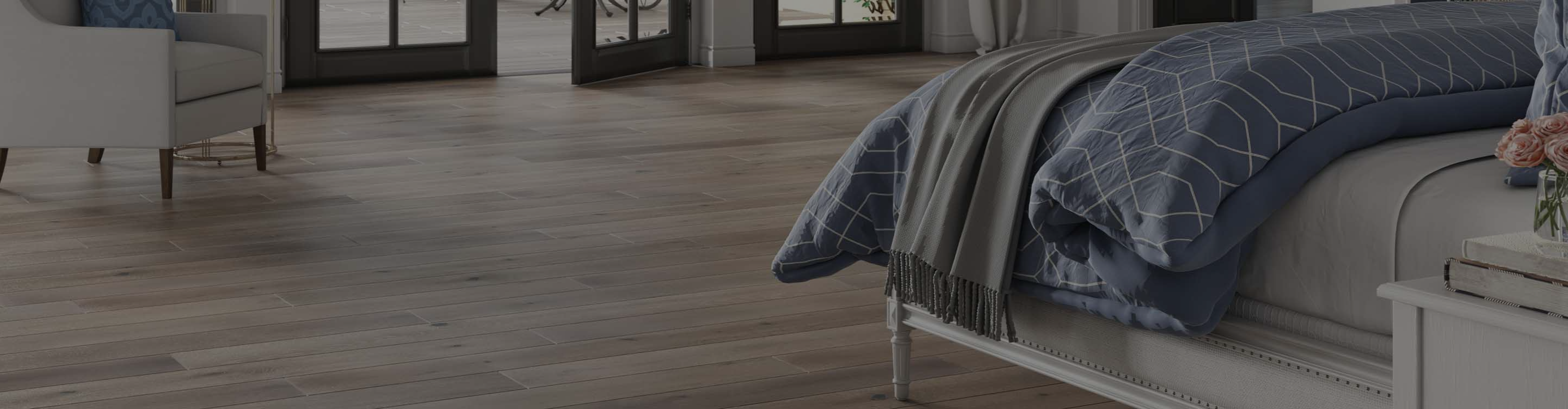
Bring natural warmth, lasting character, and timeless style to your home with hardwood flooring from Aveski Floor & Home in Dedham, Massachusetts. Our local flooring experts can help you compare genuine wood floors in an extensive selection of species, colors, plank widths, textures, constructions, and finishes.
Whether you are updating a traditional New England home, remodeling a condominium, designing a new kitchen, or selecting floors for a whole-house renovation, we make it easier to find hardwood suited to your space. Visit our Dedham showroom to see flooring samples in person, browse our current hardwood flooring selection, or request a free estimate for your upcoming project.
Hardwood flooring has remained a favorite for generations because it combines authentic natural beauty with remarkable design versatility. Every plank features distinctive grain patterns, mineral streaks, knots, and color variations created by the tree from which it was made. These natural differences give a completed hardwood floor depth and character that cannot be perfectly duplicated.
Wood flooring can complement nearly any interior, including traditional, transitional, modern, farmhouse, coastal, industrial, and contemporary designs. It also provides a flexible foundation as your furniture, wall colors, and decorating preferences change over time.
Additional hardwood flooring benefits include:
Genuine hardwood is primarily available in two constructions: solid hardwood and engineered hardwood. Both have a real wood surface, but their construction affects where and how they can be installed.
Solid hardwood is milled from a single piece of natural wood. Its substantial construction and traditional feel make it a popular choice for living rooms, dining rooms, bedrooms, hallways, offices, and other dry, above-grade areas.
Many solid hardwood products can be sanded and refinished during their usable life. This may allow the surface to be renewed after years of wear or updated with a different stain. Refinishing potential varies according to the plank thickness, installation method, condition, and manufacturer specifications.
Because solid wood naturally expands and contracts as indoor humidity changes, careful acclimation and professional installation are essential. Our experts can evaluate your room, subfloor, and environmental conditions to determine whether solid hardwood is appropriate.
Engineered hardwood has a genuine wood veneer supported by multiple structural layers. This layered construction provides greater dimensional stability while preserving the natural appearance and texture of real wood.
Depending on the product, engineered hardwood may be approved for installation above, on, or below grade. This can make it a practical choice for concrete subfloors, finished lower levels, condominiums, and homes that experience seasonal humidity changes.
Engineered hardwood may be nailed, stapled, glued, clicked together, or floated over an approved subfloor. Some collections are also compatible with radiant heating systems when installed according to the manufacturer’s requirements.
The wood species influences a floor’s grain, natural color, hardness, and overall character. Our hardwood selection includes familiar domestic woods and distinctive specialty species.
Oak remains one of the most popular hardwood choices because of its recognizable grain and design versatility. Red oak typically has warm undertones and pronounced grain, while white oak often has a more neutral color and refined appearance. Both work with a wide selection of stains and interior styles.
Maple has a fine, subtle grain that creates a clean and polished look. Its natural hardness makes it suitable for many active households, although its tight grain may absorb stain differently than oak.
Hickory is known for its bold grain, dramatic color variation, and rustic personality. It is also one of the harder domestic wood species commonly used for flooring, making it worth considering for busy rooms.
Walnut offers naturally rich brown coloring and an elegant appearance. Because walnut is softer than oak, maple, or hickory, homeowners should consider the expected traffic and possibility of dents before selecting it for an active space.
White oak has become especially popular for wide-plank, natural, and lightly stained flooring. Its muted undertones complement contemporary, Scandinavian, coastal, and transitional designs.
Color is only one component of a wood floor’s design. Plank width, grain, texture, edge treatment, gloss level, and natural variation all affect how the finished floor looks across a room.
Blonde, natural, and lightly stained floors can brighten an interior and create an open, relaxed atmosphere. Light hardwood works well with neutral walls, natural cabinetry, modern furniture, and homes with limited daylight.
Honey, chestnut, and medium-brown floors offer a versatile balance between light and dark finishes. Medium tones coordinate with many furnishings and may conceal dust, scratches, and everyday wear more effectively than extremely dark floors.
Espresso, dark walnut, and deep brown floors create dramatic contrast and sophistication. However, a dark, smooth surface may make dust, pet hair, and fine scratches more visible, so maintenance expectations should be considered.
Wide planks highlight more of the wood’s natural grain and reduce the number of seams across the floor. They are popular in open-concept homes, contemporary rooms, renovated farmhouses, and upscale traditional interiors.
Wire-brushed, hand-scraped, and distressed textures add dimension and create a relaxed, lived-in appearance. Texture can also help disguise small scratches, dents, and surface marks in active households.
Natural hardwood is durable, but no genuine wood floor is completely scratch-proof or dent-proof. Its performance depends on the species, surface finish, texture, color, traffic level, pets, furniture, footwear, and maintenance routine.
Some newer hardwood collections include enhanced finishes designed to improve resistance to scratches and everyday wear. However, even a highly durable finish should be protected from abrasive dirt, dragged furniture, damaged high heels, and untrimmed pet nails.
Traditional hardwood should be protected from standing water and excessive moisture. However, advances in flooring construction and protective finishes have created hardwood products with improved resistance to spills and moisture.
Water-resistant hardwood can provide added peace of mind in active households, but it is important to understand the limits of each product. Water-resistant does not necessarily mean waterproof, and spills should still be cleaned promptly.
For bathrooms, laundry rooms, mudrooms, or other areas with frequent water exposure, compare hardwood with our luxury vinyl flooring, laminate flooring, and tile flooring. Our team can recommend the most suitable material for each room.
Hardwood is commonly installed in living rooms, dining rooms, bedrooms, home offices, hallways, foyers, kitchens, and open-concept spaces. Product suitability depends on the room, grade level, subfloor, moisture exposure, and manufacturer requirements.
Solid hardwood is typically recommended for dry rooms above ground level. Engineered hardwood may provide additional flexibility for certain concrete subfloors, finished basements, and other applications where solid wood is not recommended.
Wood flooring can also coordinate beautifully with carpet in bedrooms, tile in bathrooms, or waterproof flooring in entryways. Explore our complete flooring selection to plan a cohesive design throughout your home.
Hardwood can create a warm, continuous look between a kitchen, dining room, and adjoining living area. It also coordinates naturally with wood cabinets, painted cabinetry, stone countertops, and decorative tile.
When choosing kitchen hardwood, consider water resistance, surface durability, household activity, and maintenance. Spills should be wiped up promptly, and protective mats can be placed near sinks and other work areas.
Planning a larger renovation? Explore our kitchen and bath remodeling services in Dedham to coordinate flooring with cabinets, countertops, tile, plumbing fixtures, and other design materials.
Hardwood can work in a pet-friendly home when the product and finish are selected carefully. Harder species, textured surfaces, matte finishes, and medium colors may help reduce the visibility of scratches and pet hair.
Keep pets’ nails trimmed, place mats near exterior doors, clean accidents promptly, and use runners in areas where pets frequently run or turn. Our flooring experts can help you compare genuine hardwood with pet-friendly laminate or luxury vinyl when additional resistance to claws and moisture is a priority.
Hardwood flooring requires careful installation to achieve a secure, attractive, and long-lasting result. Before work begins, installers must evaluate the subfloor, moisture levels, room conditions, plank direction, layout, door clearances, transitions, and required expansion space.
The appropriate installation method depends on the selected hardwood and subfloor. Depending on the product, the floor may be nailed, stapled, glued, clicked together, or floated.
Professional installation also helps protect applicable warranties by ensuring the manufacturer’s requirements are followed. Our team coordinates your flooring project from initial selection and measurement through installation and final review.
Routine cleaning helps preserve the finish and natural beauty of hardwood flooring. Sweep, dust mop, or vacuum regularly using a hard-surface setting to remove dirt and grit that can cause small scratches.
Wipe spills promptly and use only cleaners approved for your floor and finish. Avoid excessive water, steam mops, abrasive scrubbers, harsh chemicals, and oil-based soaps unless specifically permitted by the manufacturer.
Place walk-off mats at exterior entrances, use protective pads beneath furniture, and lift heavy objects instead of dragging them. Area rugs can provide additional protection in high-traffic spaces, although rugs should be moved periodically to promote more even exposure to sunlight.
Browse our floor-care products for maintenance solutions designed for different flooring materials.
Homes in Dedham and Greater Boston experience cold winters, humid summers, heating systems, and seasonal changes in indoor moisture. Because genuine wood naturally responds to its environment, maintaining stable indoor conditions can help reduce excessive expansion, contraction, or gaps between planks.
Use heating and cooling systems consistently, address leaks quickly, and maintain the humidity range recommended by the flooring manufacturer. Engineered hardwood may be worth considering when additional dimensional stability is important.
The cost of a hardwood project depends on the wood species, construction, plank dimensions, finish, product quality, room size, installation method, and site preparation. Solid hardwood, engineered hardwood, specialty species, and wide-plank products can have different material and labor requirements.
Your estimate may also account for existing flooring removal, subfloor repairs, transitions, stairs, trim, furniture moving, and disposal. Our team will help you compare products at different price levels and explain the anticipated scope of your project.
Request a free flooring estimate to receive guidance based on your rooms and preferred hardwood styles.
Aveski Floor & Home combines personalized local service with an extensive selection of flooring and interior remodeling materials. Our Dedham showroom allows you to compare hardwood alongside carpet, luxury vinyl, laminate, tile, cabinetry, countertops, and other coordinated finishes.
Customers choose our team for:
Our Dedham flooring showroom serves homeowners, designers, builders, and property owners throughout Dedham, Westwood, Norwood, Needham, Dover, Walpole, Canton, Hyde Park, West Roxbury, Roslindale, Brookline, Newton, and surrounding Greater Boston communities.
Whether you are renovating one room, remodeling a kitchen, updating a condominium, or selecting flooring for an entire home, our local team can help you find hardwood that fits your space and lifestyle.
Yes. Engineered hardwood has a genuine wood veneer supported by a layered core. It provides the natural grain and texture of real wood with added dimensional stability.
Neither construction is best for every project. Solid hardwood offers traditional construction and may provide greater refinishing potential. Engineered hardwood offers additional stability and installation flexibility. The best choice depends on the room, subfloor, grade level, humidity, and budget.
All genuine hardwood can scratch, although some species, textures, and finishes conceal or resist everyday wear better than others. Harder woods, matte finishes, textured surfaces, and medium colors are often practical for active homes.
Some hardwood products offer enhanced resistance to water and spills, but product capabilities vary. Water-resistant hardwood should not automatically be treated as fully waterproof. Review the manufacturer’s warranty and clean spills promptly.
Solid hardwood is generally not recommended below grade. Certain engineered hardwood products may be suitable for basement installation when the subfloor and moisture conditions meet manufacturer requirements.
Pet-friendly homes may benefit from harder species, durable surface finishes, wire-brushed textures, natural grain variation, and low-gloss surfaces. Regular nail trimming and prompt spill cleanup can also help protect the floor.
Medium-toned floors with visible grain, natural variation, texture, and a matte finish generally conceal small scratches, dust, and pet hair better than very dark, smooth, glossy flooring.
Some engineered hardwood products are approved for radiant heating systems. Compatibility depends on the specific flooring, heating system, subfloor, installation method, and temperature limitations.
The timeline depends on the project size, installation method, acclimation requirements, existing flooring, subfloor condition, room layout, and necessary preparation. A project estimate will provide a more accurate schedule.
Many solid hardwood floors and some engineered hardwood floors can be refinished. The available refinishing potential depends on the thickness of the wood above the tongue or core, the floor’s condition, and manufacturer guidelines.
Visit Aveski Floor & Home at 890 Providence Highway, Dedham, MA 02026 to compare solid hardwood, engineered hardwood, popular wood species, plank widths, textures, colors, and professional installation options.
Our local experts will help you evaluate appearance, durability, moisture resistance, scratch concerns, maintenance, and project costs before recommending a floor.
Request your free hardwood flooring estimate or contact our Dedham flooring experts to begin your project today.
Thank you for contacting Carpet One Floor & Home. Your local flooring expert will reach out to you regarding your inquiry.